Get on Board with ISO 14064, or Get Left Behind
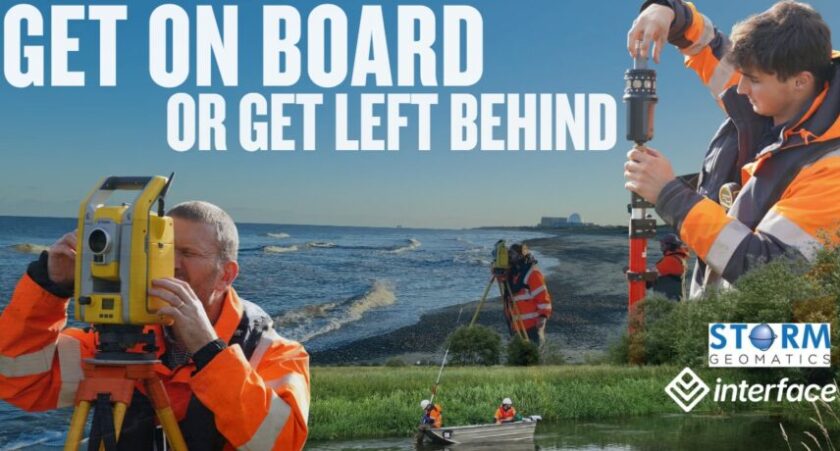
This blog reflects on our webinar ‘Get on Board with ISO 14064, or Get Left Behind,’ which you can watch by clicking here.
While anyone can produce data for a tender to enhance their chances of winning, the critical question is: Is the data accurate? Is it transparent? Is it credible? The goal of the webinar was to emphasise that by completing the verification process, you will attain credible data. The webinar focused on carbon verification and the ISO 14064 standard, exploring the “why,” “what,” and “how” of these topics. During the session, we heard specific examples from our long-standing client, Storm Geomatics. The conversation held some extremely valuable insights, so let’s dive into those.
Why the increase in carbon accounting?
The context
Data Credibility
What is the standard?
The next important topic is the standard. ISO 14064 is the standard that Storm Geomatics are working towards, and it is also what Interface is accredited against. This standard serves as a foundational framework for quantifying your carbon footprint and is essential for achieving net-zero emissions. Achieving net zero aligns with numerous government targets; for instance, the UK aims for net zero by 2050. While that may seem far off, it becomes more pressing when you start analysing the numbers and strategies to reduce emissions.
Why Do Standards Matter?
Standards are crucial because, without them, companies would quantify and calculate their emission forecasts in vastly different ways, making comparisons challenging. The primary goal of this journey to net zero is to systematically reduce emissions and strive to get them as close to zero as possible. Businesses have an incentive to lower their emission figures, but if they choose unreliable verifying bodies, they risk manipulating the numbers and overlooking significant portions of their footprint.
Standards provide a comprehensive framework detailing what should be counted, how it should be explained, and how it should be reported. They ensure a complete picture of emissions and require justification for any categories that might seem irrelevant.
The Value of Credibility
Verification adds consistency, transparency, and credibility to carbon accounting—credibility being particularly crucial. High credibility allows organisations to independently verify the reported data. Verification has become a key term over the past two years in the landscape of certifying bodies. We verify claims made by organisations regarding their carbon footprint, and this process aligns with the ISO 14064 standard, enabling thorough verification of your emissions against the established guidelines.
Verification and ISO 14064 are relatively new concepts and processes. Let’s say you contact us, and you get all of the information, and get our quote, and you are blown away with how amazingly affordable we are, and you’re really keen to start.
The first step is the pre-verification. Which is where you present your findings, and on a high-level perspective, our carbon team then identifies any risks or anomalies that might stop you in the process and completes some risk assessments. After that, you have the verification. By that point, a member of our carbon team will ask you a plethora of questions, and by the end of the process, you will have some confidence that your footprint is correct and accurate, which then means you can share it. For tendering, yes, having a calculated footprint is one thing, but having it verified often increases your score in the tendering process.
Storm Geomatics
Mike Hopkins, the Managing Director of Storm Geomatics, shared his perspective on carbon verification with us. In his role, he oversees the operations of Storm Geomatics, the only geospatial surveying company in the UK that specialises in river assessments. Mike provided valuable insights on carbon reporting and their experience with the standard.
He began by sharing an insight into the origins of Storm Geomatics’ verification journey, explaining that the process began more than five years ago. He noted that in recent years, the increased intensity of rainfall has led to more frequent flooding in our rivers. As people begin to feel the impacts of climate change personally, they often delve into the science behind it. Mike expressed his concerns about this issue and mentioned that, as an environmental advocate, he recognises the urgent need to reduce greenhouse gas emissions. Clients approach Storm Geomatics because they understand the importance of monitoring emissions throughout the entire supply chain.
Mike emphasised the necessity of honesty in their work. He believes that to effectively contribute to teams focused on solving these environmental challenges, he must be transparent about their practices. He brought up an interesting point about supply chain interests and corporate ethos. Will noted that many new clients either require verification of their sustainability efforts or seek to align their projects with their company’s values, aiming to foster a greener future.
Increased Frequency
In the last two years, Mike has noticed a growing number of tenders requesting environmental data. He highlighted that the current landscape is more data-driven than ever before. Reflecting on the past decade, he recalled that most businesses had environmental statements, but many of these lacked accountability—often falling into greenwashing. Now, having verifiable data lends credibility and confidence, allowing them to demonstrate their genuine efforts to clients. The tenders are becoming increasingly detailed, moving away from simple “tick-box” exercises toward a more in-depth examination of what actions companies are taking. Mike noted that the verification process supports them in this evolution.
Looking back on the initial stages of the verification journey, Mike found the process daunting at first. It can seem challenging to navigate, especially when considering the various emissions scopes. Scopes one and two are all about elements under a business’s direct control, such as car mileage. Typically, businesses have existing spreadsheets that contain this information. A crucial aspect is the accounting system since most carbon emissions are calculated based on an emissions factor per pound spent, which can vary by the type of goods purchased. Therefore, having a robust accounting system is essential for generating accurate reports. However, compiling all of this data and consolidating it into a single spreadsheet can be a significant task. The goal is continuous improvement, starting with imperfect data and working toward better consolidation and reduction.
Displaying Metrics
Storm Geomatics publicly displays its verification on its website, showcasing various metrics. They present their total carbon footprint—known as absolute emissions—as well as their intensity ratio, which measures emissions per unit of output and reflects business growth.
A common misconception about carbon reduction is that it does not align with business growth. However, this is not the case. The intensity ratios are designed in a way that allows businesses, even during periods of growth, to gradually reduce emissions in critical areas, such as transportation. This strategy ensures that emissions per pound spent also decrease, allowing for sustainable expansion.
Contact us
Firstly, we want to say a big thank you to Mike Hopkins and the team at Storm Geomatics. It has been a pleasure to hear your experience with the verification process and have you collaborate for this webinar.
If you want more information about starting your verification journey. Please contact us through our no-obligation quote form on our website.
Get on board with ISO 14064, or get left behind.